Queen's University - Utility Bar

Queen's University Library

Resources for Teacher-Librarians

Advocacy Materials

Introductory PowerPoint on Together for Learning | Together for Learning

Partners in Learning: Teachers & Teacher-Librarians
This is a brochure made for teacher-candidates that outlines how teachers can work with teacher-librarians to implement the many inquiry objectives in the Ontario curriculum.

Alternative Practicum in Libraries
This is a brochure made to encourage teacher-candidates and teacher-librarians to consider joining forces as part of the Queen's University Bachelor of Education alternative practicum experience. Librarians who are interested in hosting a teacher candidate for a three-week placement after the March break are invited to contact Corinne Laverty via email: lavertyc@queensu.ca.

Library Programs and Student Performance.
This is a presentation by Professor Elizabeth Lee, Faculty of Education, Queen's University. The paper based on this research is:

Klinger, D.A., Lee, E.A., Stephenson, G., DeLuca, C., Luu, K. (2009). Exemplary School Libraries in Ontario. Ontario Library Association, Toronto, ON.

Patti Owen's website offers current articles on inquiry for teacher librarians at the secondary level.

Teacher-Librarian's Toolkit for Evidence-Based Practice
In this toolkit you will:

  • Discover how to provide your school community with irrefutable evidence that your library program improves student achievement.
  • Learn how evidence-based practice can evolve your advocacy efforts into supportive action.
  • Build a repertoire of assessment tools and strategies.

Links to Library Associations for Instruction Materials

About Queen's Library

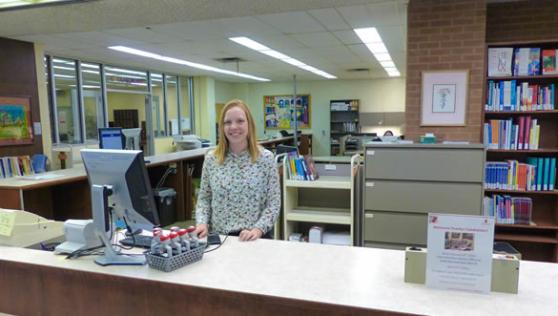
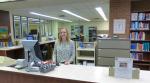
You are welcome to bring your students on a walking tour of Stauffer Library to view a modern university library. To ensure an enjoyable learning experience, we recommend that a class be divided into small groups and assigned several activities. Sample activities follow:

  • Check the self-guided walking tour on the Web. The brochure can be printed or copies can be picked up in Stauffer Library at the main floor Directory just beside the spiral staircase. An overview of the Queen's Library describes collections, access, and services. Students can be asked to tour themselves and collect a few facts on the way to share with the rest of the class. (e.g. How many books are in the collections at Queen's, how many journals, other ideas below)
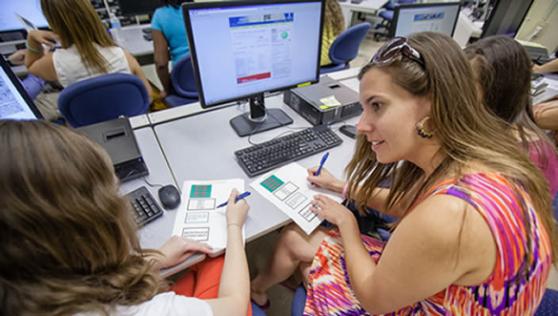
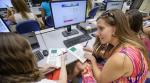
  • Have your students observe the library users at work. What new behaviours do they observe? (e.g. laptop use, copy cards, group study rooms)
  • What library features did students find different or unusual in comparison to the high school library? (e.g. fireplace reading room, reading rooms, compact shelving, number of books, number of floors, number of workstations)
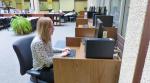
  • Using one of the computer workstations, list the steps you would use to locate a copy of the book The Interpretation of Dreams. How many copies in English translation are in the library system? Find a copy that can be consulted in the upstairs collection. Determine the floor on which you would retrieve the book. Go to the appropriate floor and find the book on the shelf. What did you learn about the call number system used at Queen's in completing this exercise?

Check Encyclopedias

We recommend that students begin their research by consulting an encyclopedia. Apart from the many print encyclopedias in the Library, we provide a list of electronic encyclopedias. Many university students find these tools useful in providing an overview and background information on a topic that is new to them.

Subject Guides

Queen's librarians have created comprehensive subject guides to various areas of study. Each subject guide in the humanities and social sciences provides suggestions on how to begin research under the heading Approaches to Research or it may link to an overview of a Research Strategy Guide that illustrates the steps within the research process. Each subject guide in the humanities and social sciences outlines discipline-specific tools for identifying resources (reference works, books, articles, and websites). Use these guides as a starting point for suggested research tools in an area.

Find Books

Direct students to the Library's online catalogue (QCAT) to search for books and government documents. Students determine the holdings, locations and call numbers of Queen's University Library by searching QCAT. Limit to e-books to download a set of pages. There are many guides on how to use QCAT including an online tutorial and a basic search guide.

Sample activities:

  • What differences did students find when searching by subject and keyword?
  • Experiment with synonyms and alternate phrases to refine or expand searching. What did you learn by using different search terms?

Find Articles

While at Queen's, follow the path at library.queensu.ca >> Databases>> Browse Databases by Subject to research  indexes for articles in various disciplines. These indexes to articles represent the research published on a particular subject, not the holdings of Queen's Library. It is always necessary to determine if the articles identified in the index are available at Queen's. We recommend starting from one of the following broad subject indexes:

This is a set of databases available free to all schools and libraries in Ontario. Resources support interests from kindergarten through to university level.

  • Canadian Business and Current Affairs 1982 - present (updated monthly)
    CBCA contains citations to articles in over 750 Canadian periodicals as well as the Globe and Mail and the National Post. Titles include popular sources such as Macleans and Time along with scholarly journals such as the Canadian Journal of Sociology. About one-third of this index includes fulltext articles which can be saved to disk or emailed to any account.

  • Social Sciences 1983 - present
    Provides citations to articles of at least one column in length published in more than 415 English-language social sciences journals. Includes feature articles; reports of symposia and conferences; interviews; biographies; obituaries; book reviews. Subject coverage includes anthropology, area studies, community health and medical care, corrections, criminology, economics, ethnic studies, geography, gerontology, international relations, law, minority studies, planning and public administration, police science, policy sciences, political studies, psychiatry, psychology, public welfare, social work, sociology, and urban studies.
     

  • Newspaper Resources describes how to locate newspaper articles from past centuries up to the present day.

How-To Guides

Visit our How-To Guides for search tips on these topics:

  • using the library catalogue to find books
  • using journal indexes to find scholarly and popular journal articles
  • how to find newspaper articles
  • how to cite resources in a bibliography (including websites)
  • finding and writing book reviews

Last Updated: 12 November 2012